We are always delighted to hear from visitors who have a family connection to the framework knitting trade- a rich and important part of our heritage.
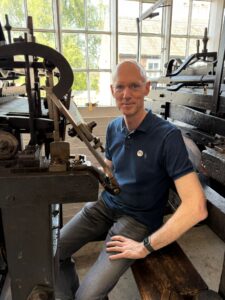
This week, we had the pleasure of welcoming James Calladine to the museum. James shared fascinating insights into his family history, tracing back to his great-grandfather, Mr Calladine, who was the former owner of the Hucknall Manufacturing Company.
The company began in 1856, during the early days of the shawl trade, when production was still a cottage industry. Starting in a modest space with room for just two or three knitting frames, the business eventually moved to a larger site on Titchfield Street. The knitters formed their own union- the United Wool Fall, Shawl, and Antimacassar Trade Union– to advocate for fair working conditions and wages.
By a remarkable coincidence, our frameshop exhibits include an original union statement of prices from 1897, directly linked to this very trade.
In 1964, a shift in business strategy saw the company begin selling directly to leading stores in London and international markets. This move helped secure two years’ worth of handframe orders and spurred a surge in demand. The company, still producing shawls, mohair and cashmere scarves, bed jackets, and nightgowns, expanded its operations to include 36 hand frames. However, skilled knitters and quality handframes became increasingly hard to find.
Eventually, powered machinery took over, running 24 hours a day, seven days a week– with just two machines able to produce the equivalent of what 140 handframes once could. Despite these changes, the company continued to operate into the early 2000s and may well have been the last in Hucknall to produce using handframes.
We’re incredibly grateful to James for sharing this piece of living history with us. Personal stories like his help bring the framework knitting story to life and remind us just how deep the roots of this industry go in our communities.
If you have family connections to the trade, we’d love to hear from you. Your stories help preserve this important heritage for future generations.